The Littleover Grange
A Breif History
Builder and first owner of Little-Over Grange
John Harrison, Attorney at Law
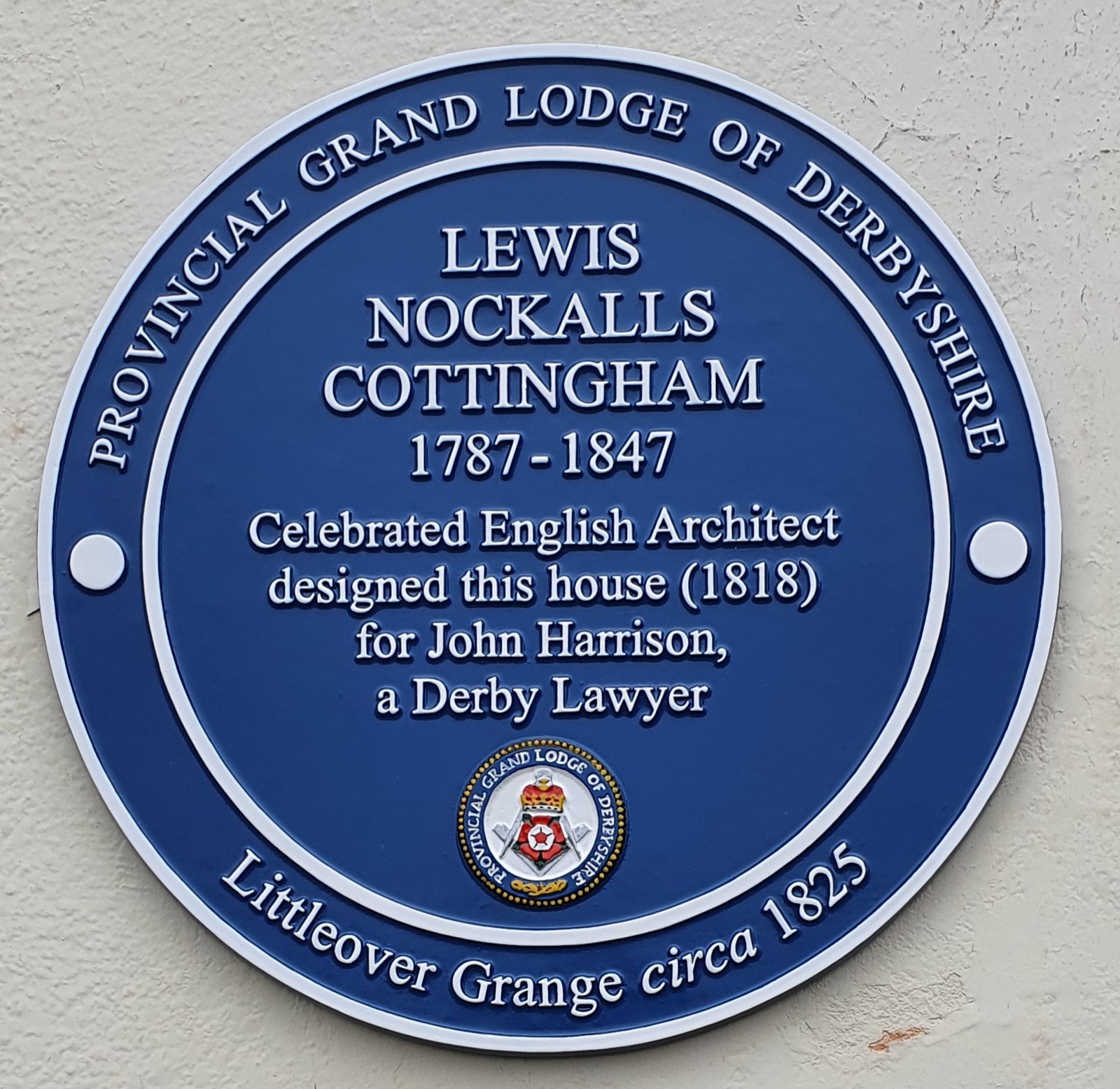
The Littleover Grange was designed by Lewis Nockalls Cottingham for John Harrison (1782-1871) who built the Grange in or around 1820. The house is described as ‘An early classical villa’.
John Harrison and his wife Elizabeth (nee Evans) lived in the house, we believe, for probably ten years. Harrison was an Attorney at Law and although he used the Grange as his ‘Seat’ he possessed another property in Derby, 35-36 St Mary’s Gate – convenient, presumably, for his law practice!
Harrison’s family were Yeoman farmers living in the village of Normanton-by-Derby, which at the time was part of the parish of St. Peter, Derby.
As a young man Harrison was highly ambitious and ultimately very successful, inheriting the ownership of Snelston Hall and estate. Later, he was appointed to serve on the Staffordshire and Derbyshire Bench and became High Sheriff of Derbyshire in 1833. During his time, he developed the Estate and the village of Snelston where he built houses and provided a village school. He was a moderniser and philanthropist fully embracing the spirit of the age.
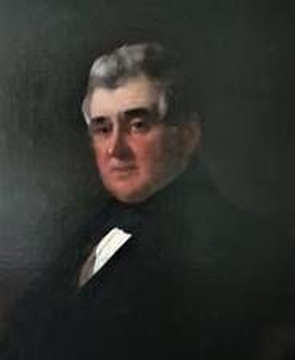
Second owner of Little-Over Grange
William Morley, Lace Maker
During the period of William Morley’s occupancy of the Grange it became a family home for his wife and their eight children* 4 boys and 4 girls. The family lived here for 42 years until the house was sold in 1874. According to his Will it appears that William left Derby having bought a farm at Wigston. There is nothing known relating to his wife, only his children and their spouses are recorded in his Will (dated June 1856).
* There is a single reference which refers to 5 sons but, in his Will, only 4 of them are mentioned.
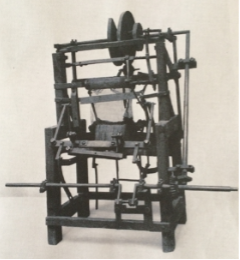
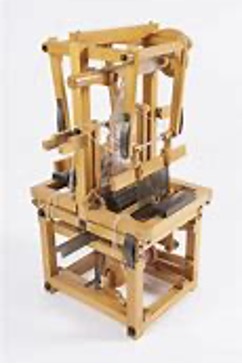
William Morley is described as a Lace Maker. He was born in Cotgrave, Nottinghamshire in 1785. During this period, the counties of Nottingham and Leicester were world leaders in the development and manufacture of Lace and Lace Making machinery. However, this fledgeling industry was blighted by the activities of the Luddites who not only smashed the mechanical looms but also burnt down the mills. In particular, Boden’s Mill in Loughborough (a significant major developer) was razed causing the owner; John Boden to relocate to Derby and start afresh, going into partnership with William Morley. Morley was an engineer and inventor and had managed to adapt and improve on the previous existing machinery. This partnership was to prove a ‘game changer’ in the development of mechanical Lace Making.
Their new Lace enterprise Boden and Morley was to become highly successful and their massive new mill was erected in 1825. Boden was the business man and Morley had the creative nous. The mill was operated and run by fifty-six steam powered machines which were Morley’s especial achievement.
“Mr William Morley, now of the firm of Boden and Morley, of Derby, introduced the straight-bolt bobbin net and the circular-bolt bobbin-net machines, both of which are now in use; and we do not hesitate to say, that the machinery in Messrs. Boden and Morley’s extensive mill is the best in the trade. To the family of the Levers this manufacture is indebted for the various improvements, and the more recent inventions and ingenious methods of adapting the Levers’ bobbin net machine.
The manufacture of the beautiful fabric called bobbin net-lace has been introduced into Derby within the last twenty years.* Notingham and Loughborough were some years the chief marts of it. Very extraordinary profits were obtained on its first introduction. This induced numbers who could raise a little capital to embark in it. The geat demand for machines causing them to rise five or six times above their real value. Many tradesmen, who had been travelling steadily on in the old beaten tract, fancied they saw golden days ahead at hand. The bobbin net machine was to be the means of realizing to the possessor a rapid and spendid fortune. In the brilliant prospect the speculative mind became dazzled, and head giddy. The picture was too glowing to be real and some soon found out they had speculated their all, and that all had gradually sunk into oblivion.” Glover’s Derby
‘The History and Directory Of the Borough of Derby’
NOTES The Morley Family made little impact if any on the Fabric of the Little Over Grange during their occupation.
William Morley’s 4th son, Henry James Morley was Initiated in to the Tyrian Lodge No 468 on 25th October 1853.
Third owner of Littleover Grange
Reuben Eastwood, Cast Iron Manufacturer
Reuben’s father James Eastwood, a talented foundry man, was born on 6th March 1808 at Alderwasley, near Ambergate, Derbyshire, and was with his father at Alderwasley Forge until twenty-one years of age, learning his trade as a hammerman.
After working a short time at the Codnor Park Iron Works and at Manchester he settled at the Mersey Steel & Iron Works, Liverpool, where he remained many years, making the large Marine-Engine and other forgings, which were considered enormous at that period; and inasmuch as there was no steam hammer in use then they may still excite wonder.
In 1847 he left Liverpool to join the late Mr Thomas Frost of Wigan, and commenced business in Derby under the style Eastwood and Frost, which partnership was terminated by Mr Frost’s death in 1853. He brought out several inventions, including steam-hammer motions and a hydraulic shearing press, of which a description was given to the Institution of M.B.
In 1867 he with his son amalgamated their business with that of their neighbours, Messrs. Swingler & Son, the two Works being carried on under the style of Eastwood, Swingler & Co.
James Eastwood died 17th April 1874 after a yearlong illness.
Reuben Eastwood succeeded his father in the running of this highly significant Iron business. He was knowledgeable and smart and expanded works to become a major employer in Derby. He purchased Littleover Grange in 1874 to provide a family residence for his 7children. He did not immediately take up residence wishing to develop and improve the property first. The grounds were large and he set about remodelling them to the fashionable Italianate style which was proving very popular with the rapidly growing managerial class. He also set about structural changes too, adding a Campanile or Bell Tower to the main house. The living accommodation had hardly changed during the Morley ownership and it is fair to assume that Reuben Eastwood would have paid great attention to the detail in the development of his newly acquired property.
Sadly, Reuben Eastwood never got to live in his re-modelled house. He died young aged 44 on St Valentine’s day 1877 before all the alterations he had commissioned had been completed. On the completion of the work, his widow and five of his children moved into the Grange. The family continued to live at the Grange until the sole survivor, Florence died in 1938. After her death the property was sold to Littleover Parish Council.
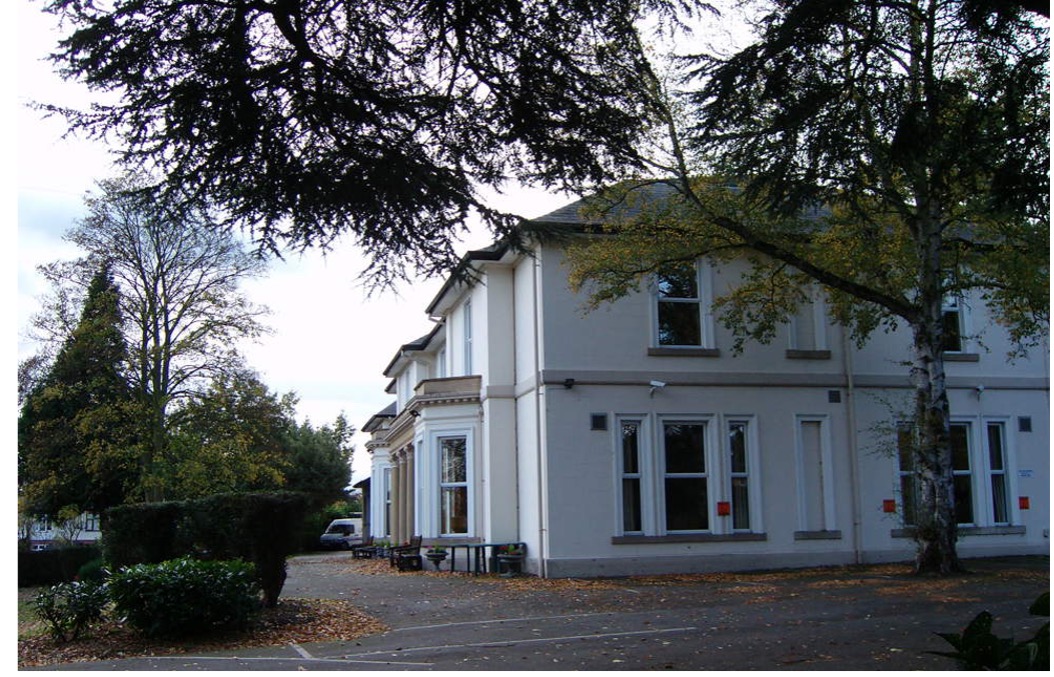
In 1938 Littleover Parish Council purchased the Grange for the sum of £2,700
The Parish Council converted the Stables into what is now the Grange Community Hall. The remainder of the Estate going to local speculative Builders. Messr. Fryer for £1950.
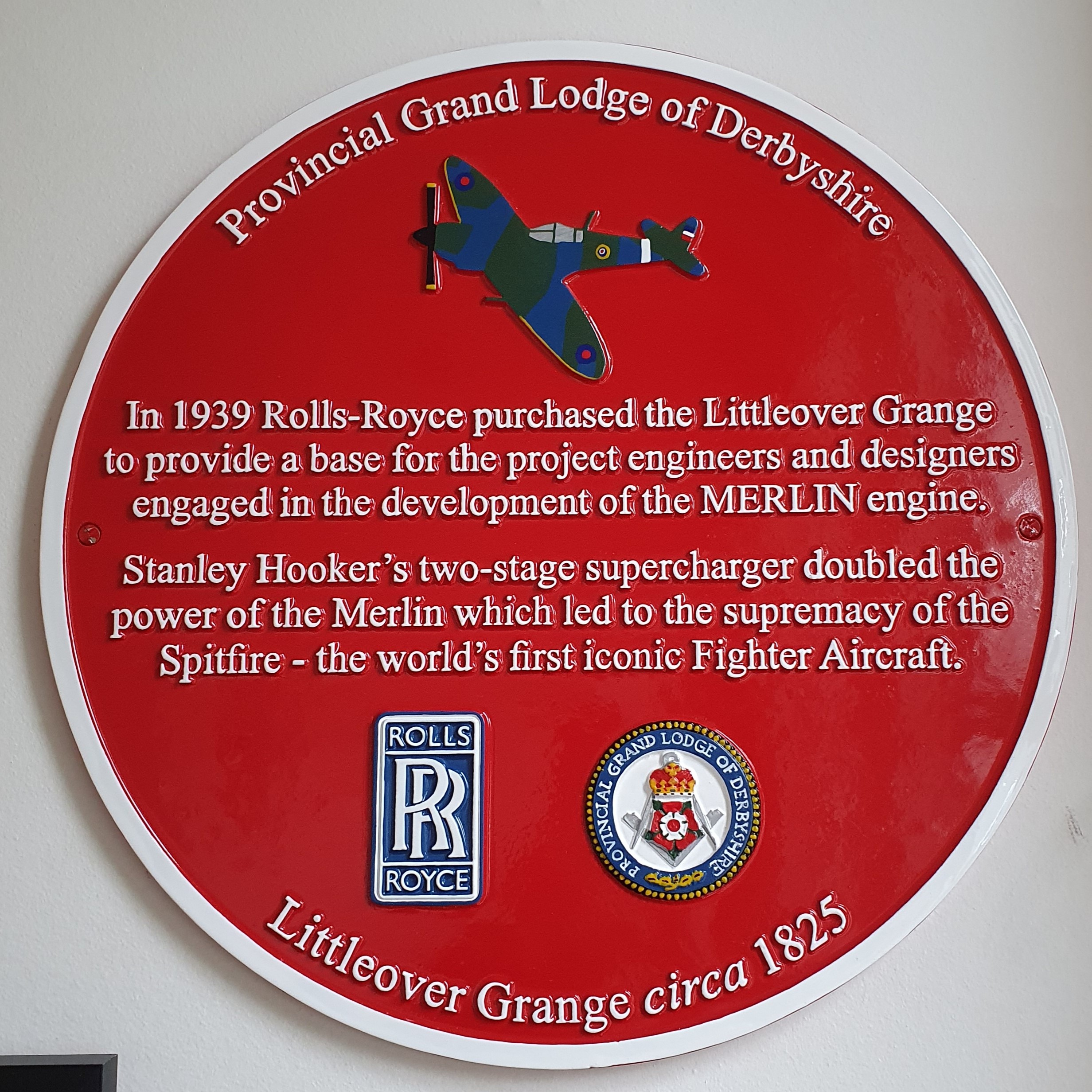
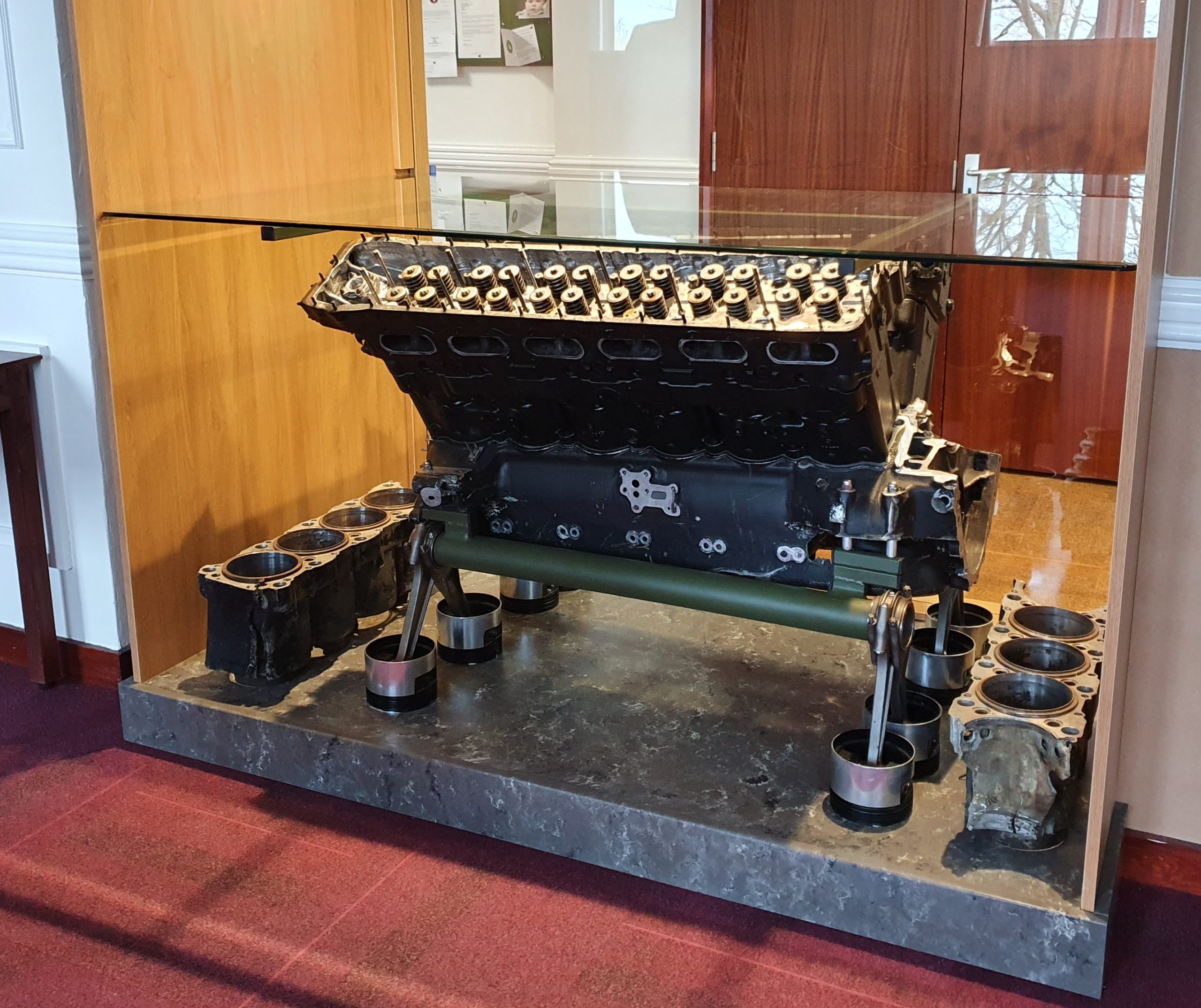
In 1939 At the outbreak of the war the house was requisitioned (and later purchased) by Rolls-Royce as an overspill development office for the Merlin engine. The Company added a utilitarian West Wing in a vaguely matching style and stuccoed it to match the house. The house was sold in 1971 due to the firm’s bankruptcy.
In 1972 The house was purchased by the Derbyshire Freemasons as their Headquarters and to serve as a base for the Derby lodges. The Stable Block was demolished and a vast new Wing created. On the first floor of the new Wing stands a large windowless Masonic Temple.
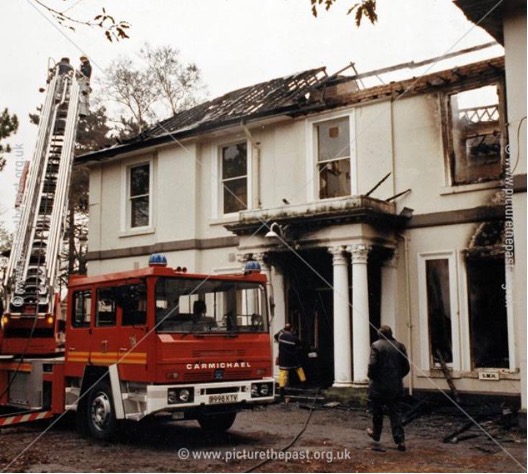
On the 2nd of December1 990 part of the original structure was gutted by a destructive fire with the loss of two hundred years of irreplaceable museum quality relics and documents.